

CBIC Chief Urges Customs to Accelerate AI and Analytics Adoption
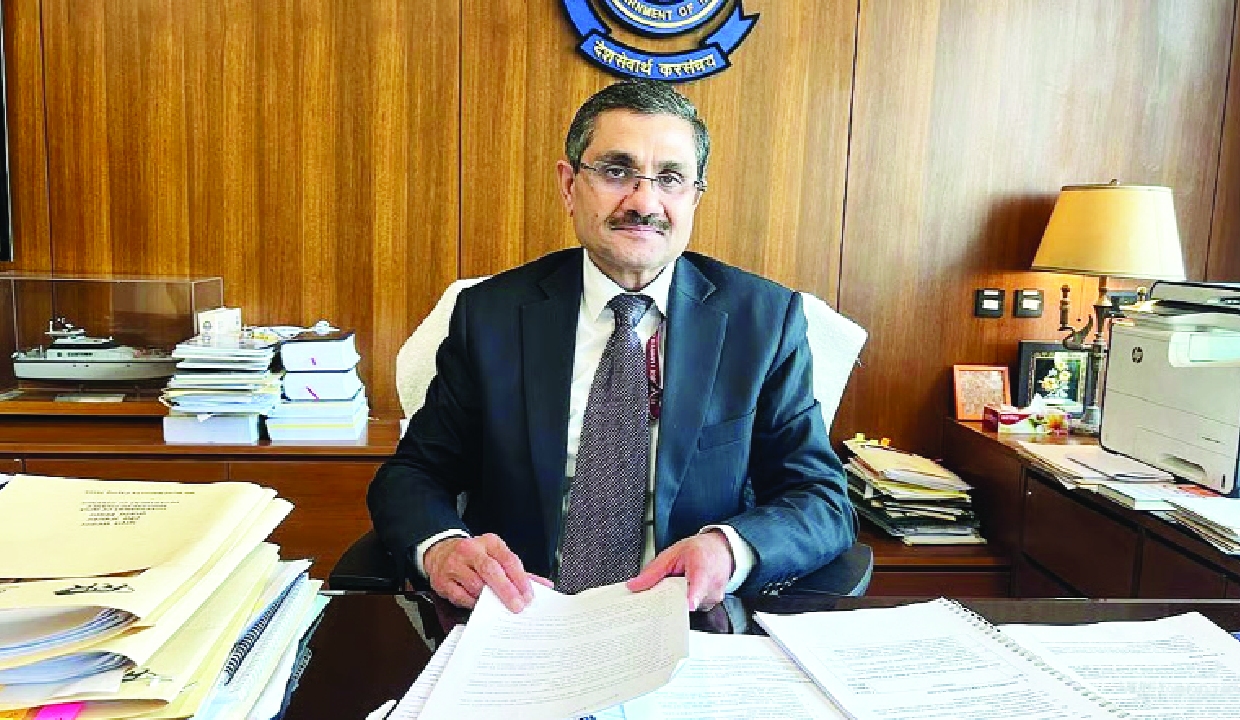
Central Board of Indirect Taxes and Customs (CBIC) chairman Vivek Chaturvedi announced on Wednesday that the Customs department must expedite the implementation of artificial intelligence, machine learning, and real-time analytics. The push aims to minimize physical interactions for trusted taxpayers and establish a streamlined digital environment.
What Happened
Speaking on Wednesday, CBIC chairman Vivek Chaturvedi outlined a comprehensive framework consisting of five pillars for the Customs department to adopt over the coming decade. A primary objective of this long-term strategy is the creation of a "unified, trusted taxpayer ecosystem." This system seeks to record consistent compliance by businesses across goods and services tax (GST), customs, and other indirect tax payments, thereby bringing greater synergy across the entire indirect tax division.
As part of this modernization effort, the Customs department is directed to accelerate the deployment of advanced technologies, including artificial intelligence, machine learning, real-time analytics, and predictive applications. The ultimate ambition is to transition toward a near-touchless, near-digital experience that reduces the physical interface between tax authorities and compliant businesses.
Key Details
- CBIC outlined 5 pillars for the Customs department to follow over the next decade.
- The strategy aims to reduce transaction costs and dwell costs for businesses.
- Customs departments are tasked with handholding Micro, Small, and Medium Enterprises (MSMEs).
- Outreach programs are planned for schemes such as the Eligible Manufacturer Importer (EMI) and Authorised Economic Operator (AEO).
- Currently, over 6,000 entities hold AEO certificates, encompassing importers, exporters, logistics providers, custodians, terminal operators, custom brokers, and warehouse operators.
- India has established Mutual Recognition Agreements (MRAs) on AEO with 11 countries, with additional agreements currently in the pipeline.
Why It Matters
The integration of artificial intelligence and real-time analytics into the customs framework is expected to directly benefit businesses by reducing transaction and dwell costs. By moving toward a near-touchless and near-digital experience for trusted taxpayers, the initiative simplifies compliance and operations across GST, customs, and other indirect tax obligations.
What We Know So Far
All outlined initiatives, including the 10-year timeline for the five pillars, the adoption of AI and machine learning technologies, and current metrics regarding AEO-certified entities and international Mutual Recognition Agreements, are officially confirmed by CBIC chairman Vivek Chaturvedi.


