Techbuzz247

Techbuzz247

Breaking

Friday, September 25, 2026

September 25, 2026

OPSWAT Highlights Critical Defense at GISEC 2026

At GISEC Global 2026, OPSWAT stressed the need for advanced prevention and deep file inspection to secure critical infrastructure against AI threats.

OPSWAT Focuses on Critical Infrastructure Defense at GISEC 2026

At GISEC Global 2026, cybersecurity firm OPSWAT emphasized the urgent need to enhance prevention and protection mechanisms for critical infrastructure. The company called for deeper inspection of incoming files and data to counter increasingly sophisticated, AI-driven threats.

What Happened

During GISEC Global 2026, OPSWAT highlighted a strategic shift in cybersecurity priorities for critical infrastructure sectors, advocating for stronger prevention and protection alongside traditional detection and response capabilities.

According to James Neilson, Global Head of Sales at OPSWAT, the global threat landscape has grown increasingly volatile. Threats have evolved past basic cyber hacktivism into persistent, sophisticated campaigns orchestrated by nation-state-sponsored actors utilizing artificial intelligence.

Key Details

  • OPSWAT advocates for deeper inspection of files and data entering enterprise environments.
  • Focus sectors include defence, energy, nuclear, and other critical infrastructure.
  • Perimeter protection can no longer rely solely on a firewall or one or two malware engines against AI-powered threats.
  • The protection element of the NIST Cybersecurity Framework has historically lacked the required depth of attention, per James Neilson.

Why It Matters

Critical infrastructure organizations face a rapidly evolving threat landscape driven by nation-state actors and AI-powered attacks. Chief Information Security Officers (CISOs) are primarily concerned with whether advanced threat actors are quietly infiltrating enterprise environments and establishing groundwork for future attacks, making deeper data inspection vital for defense.

What We Know So Far

All provided facts are confirmed from the interview and event reporting, with no unconfirmed rumors or speculation noted.

Sources

September 25, 2026

US and China Tech Collaboration Persists in Hardware

Despite ongoing geopolitical tensions, market forces and hardware supply chains continue to drive cooperation between Chinese and American technology firms.

US and China Tech Collaboration Persists Amid AI and Hardware Ties

Despite ongoing geopolitical tensions and widespread rhetoric regarding technological decoupling, market forces and hardware supply chains continue to draw Chinese and American technology firms closer together. Industry leaders and recent business partnerships demonstrate sustained cooperation across artificial intelligence, automotive chips, and robotics.

What Happened

Market dynamics, specialized skill sets, and deeply integrated hardware supply chains are maintaining connections between technology companies in China and the United States. According to Sean Stein, president of the US-China Business Council, both nations serve as the world's primary players in artificial intelligence, with China driving exceptionally rapid innovations.

Recent corporate partnerships underscore this ongoing cross-border cooperation. In April, Chery Automobile announced a global strategic partnership with US chipmaker Nvidia to jointly develop physical AI for assisted driving, cockpit AI, and robotics. Furthermore, Nvidia CEO Jensen Huang announced collaboration with Chinese humanoid robot maker Unitree in June to launch the Isaac GR00T humanoid robot reference platform. In the legal technology sector, US-based legal AI firm Harvey released its first post-trained open-weight model, named Tenet, in August, built upon Chinese AI company Moonshot's Kimi K3.

Chipmakers are also adapting to regulatory and market landscapes. In June, US chipmaker Qualcomm announced plans to launch customized AI data center chips in China that comply with US export regulations.

Key Details

  • Key developments and supply chain metrics highlight the ongoing integration between US and Chinese technological ecosystems:
  • Harvey released its Tenet open-weight model based on Moonshot's Kimi K3 in August.
  • Chery Automobile and Nvidia partnered in April to develop physical AI for assisted driving, cockpit AI, and robotics in April.
  • Nvidia and Unitree collaborated on the Isaac GR00T humanoid robot reference platform in June.
  • Qualcomm announced customized AI data center chips for the Chinese market complying with US export regulations in June.
  • China ranks first worldwide in downloads of open-source large language models, according to the Ministry of Industry and Information Technology.
  • Morgan Stanley estimated that Chinese suppliers make up 63 to 70 percent of Tesla Optimus's core components, noting that removing Chinese components entirely would increase the production cost of Optimus Gen 2 from $46,000 to $131,000.

Why It Matters

The continued cooperation between US and Chinese firms highlights the practical realities of global technology supply chains and specialized market capabilities. As Qian Kun noted, AI is expanding from single applications into multiple terminals such as phones, PCs, glasses, cars, and robots, supported by China's vast digital economy, complete industrial system, and vibrant developer ecosystem.

What We Know So Far

All reported partnerships, product releases, and market statistics represent confirmed facts based on recent announcements and financial estimations from companies including Nvidia, Qualcomm, Chery Automobile, Harvey, and Morgan Stanley. There are no unconfirmed rumors noted in the available source data.

Sources

September 25, 2026

Ray-Ban Meta Gen 3 Smart Glasses: 3K Video & Design

Ray-Ban and Meta have announced the Gen 3 smart glasses, featuring a slimmer design, upgraded camera system, and new 3K video recording capabilities.

Ray-Ban Meta Gen 3 Smart Glasses Introduce 3K Video and Slimmer Design

Ray-Ban and Meta have unveiled the Gen 3 smart glasses, bringing major hardware upgrades to the wearable tech line. The new model introduces a 3K video recording capability, a refined camera system, and a slimmer physical profile designed for improved comfort.

What Happened

According to details highlighted by TechAvid and reported by Geeky Gadgets, the Ray-Ban Meta Gen 3 smart glasses combine updates to both style and practical functionality. The new generation focuses heavily on refining the physical hardware, offering adjustments to dimensions, camera components, audio systems, and battery longevity.

Design adjustments include a noticeably slimmer frame. The temples on the Gen 3 have been reduced in height by 1 millimeter and decreased in thickness by 0.3 millimeters. Additionally, the smart glasses now incorporate adjustable temple tips, allowing users to customize the fit for a wider variety of face shapes.

Key Details

  • Camera: Refined 12-megapixel camera system capable of recording video up to 3K resolution.
  • Design: Slimmer frame with temples reduced by 1 millimeter in height and 0.3 millimeters in thickness.
  • Fit: Adjustable temple tips for a customized fit.
  • Camera/LED Opening: Reduced in size by 36%.
  • Audio: Six-microphone system that reduces background noise by over 90% and is prepared for future Dolby Atmos support.
  • Battery Life: Up to 9 hours of use on a single charge, paired with a redesigned charging case that provides an additional 50 hours of power.

Why It Matters

The updates to the Ray-Ban Meta Gen 3 center on improving both usability and capture quality for everyday wearers. By reducing the overall frame dimensions and integrating adjustable temple tips, the manufacturers have addressed physical comfort. Meanwhile, the bump to a 12-megapixel camera supporting 3K video resolution, alongside an audio system featuring a six-microphone array with over 90% background noise reduction, provides tangible upgrades to media capture and sound performance.

What We Know So Far

All details regarding the Ray-Ban Meta Gen 3 specifications—including its 3K video recording, 12-megapixel camera, physical dimensions, microphone capabilities, and battery life—are confirmed updates based on the current product breakdown.

Sources

September 25, 2026

AI Infrastructure Investment to Reach $769B by 2026

Global investment in artificial intelligence infrastructure and model architectures is projected to surge to USD 769 billion by 2026.

AI Infrastructure Investment Projected to Reach USD 769 Billion in 2026

Investment in artificial intelligence infrastructure and model architectures is on track to surge to approximately USD 769 billion in 2026. This massive capital influx comes as industry leaders increasingly voice concerns regarding safety and the rapid pace of technological development.

What Happened

According to McKinsey's Technology Trends Outlook 2026, the projected USD 769 billion investment in AI infrastructure and model architectures is based on nearly USD 384 billion invested during the first half of the year, assuming the current pace continues. This figure marks a significant increase from 2025, during which USD 145 billion was invested in AI technology, while energy technologies attracted nearly USD 200 billion.

In parallel with these funding trends, financial backing for specific AI firms is expanding. SoftBank launched an USD 11 billion bond offering aimed at funding an additional USD 10 billion investment in OpenAI. Meanwhile, McKinsey's report notes that five technology trends are overall on track to receive more than double the investment in 2026 compared to the previous year.

Key Details

  • Projected 2026 AI infrastructure and model architecture investment: USD 769 billion
  • First half of 2026 investment: Nearly USD 384 billion
  • 2025 AI technology investment: USD 145 billion
  • 2025 energy technologies investment: Nearly USD 200 billion
  • SoftBank financial activity: USD 11 billion bond offering to fund a USD 10 billion investment in OpenAI
  • McKinsey trend metrics: Five technology trends are on track to receive more than double the investment in 2026 compared to 2025

Why It Matters

The massive capital deployment into artificial intelligence highlights the growing scale of financial commitments across the sector. However, this rapid expansion occurs alongside warnings from industry executives and developers regarding safety and pacing, as McKinsey cautions that AI growth could face constraints from shortages in energy, talent, capital, legacy technology systems, and cybersecurity.

What We Know So Far

Confirmed facts include McKinsey's 2026 investment projections, the 2025 funding figures for AI and energy technologies, SoftBank's bond offering, and safety calls from industry leaders.

Unconfirmed reports and ongoing discussions include: - OpenAI is reportedly in discussions with investors for additional funding that could potentially value the company at around USD 1.2 trillion. - Anthropic is reportedly in discussions with Nvidia regarding a potential investment of up to USD 10 billion, tied to a proposed IPO that could potentially raise as much as USD 100 billion, according to Reuters.

Background

Industry leaders have actively addressed safety concerns alongside these financial developments. Anthropic CEO Dario Amodei has called for the global AI community to slow the release of new capabilities to allow more time to address safety risks. Additionally, OpenAI has called for mandatory national AI safety requirements—including independent assessments, cybersecurity measures, and incident reporting for advanced systems—and urged the United States to lead international efforts in establishing technical standards for frontier AI and systems capable of recursive self-improvement.

Sources

Wednesday, September 23, 2026

September 23, 2026

AI Impact on Application Security Discussed by Harness

Harness executive Rahul Sood discusses how the rapid adoption of AI-assisted coding tools is creating new strains on application security and vulnerability remediation.

Harness Security Executive Discusses AI Impact on Application Security

Artificial intelligence is fundamentally transforming software development, but the rapid pace of AI-assisted coding is creating a massive strain on application security teams. In a recent interview, Rahul Sood of Harness addressed how autonomous agents and AI tools are widening the gap between vulnerability detection and remediation.

What Happened

In an interview with The Cyber Express, Rahul Sood, General Manager of Application Security at Harness, discussed the growing challenges that application security teams face as developers increasingly adopt AI coding tools and software agents. Sood pointed out that the single biggest change brought by artificial intelligence is speed, noting that development has accelerated dramatically while security processes have failed to keep pace.

Traditional application security scanning relies heavily on fixed checkpoints—such as pull requests, code merges, or nightly builds—that were designed for an era when developers produced only a handful of meaningful commits each day. Sood noted that even if AI wrote code with the exact same level of security as a human, the sheer volume of code being generated would still overwhelm the scanning methods used by most organizations.

Furthermore, the integration of Large Language Model (AI) based scanning tools has the potential to find 10 times more vulnerabilities compared to traditional scanning tools. This surge in discovery means that the vulnerability discovery side of the pipeline is outpacing triage and remediation by an even wider margin than before.

Key Details

  • Rahul Sood serves as General Manager of Application Security at Harness.
  • Traditional security scanning is typically triggered at fixed checkpoints like pull requests, merges, and nightly builds.
  • LLM-based scanning can potentially find 10 times more vulnerabilities than traditional tools.
  • AI agents can identify issues and immediately begin acting on them in close proximity to the same motion.

Why It Matters

The rapid adoption of AI coding assistants has drastically altered the volume and velocity of software creation, leaving security teams struggling to process the sheer amount of code being generated. With LLM-based scanning uncovering significantly more vulnerabilities, organizations face an escalating backlog in triage and remediation. According to Sood, AI agents may help bridge this gap by enabling automated responses where issues are identified and acted upon simultaneously.

What We Know So Far

All stated information is confirmed via the interview with Rahul Sood, GM of Application Security at Harness, as published by The Cyber Express. There are no unconfirmed rumors or speculation included in the verified source material.

Sources

September 23, 2026

Trina, Clarke Energy & Temporis Expand UK BESS

Trina Storage, Clarke Energy, and Temporis Capital are expanding their UK battery storage partnership across a 290 MWh project portfolio.

Trina Storage, Clarke Energy, and Temporis Expand UK BESS Partnership

Trina Storage, Clarke Energy, and Temporis Capital are deepening their collaboration across three UK battery energy storage system (BESS) projects. The multi-project partnership spans a total capacity of 145 MW / 290 MWh and highlights the deployment of Trina Storage's Elementa platform.

What Happened

Trina Storage, the energy storage division of Trinasolar, is expanding its UK collaboration with Clarke Energy (a Rehlko business) and Temporis Capital. The partnership encompasses project delivery, technology provision, and long-term services across a three-project portfolio totalling 290 MWh.

Among the developments is the Boat of Garten BESS project located in Scotland. Signed in 2024 and now successfully connected, the 50 MW / 100 MWh facility features custom Trina Storage Elementa battery cabinets. In addition to the Boat of Garten project, the collaboration includes the Fraserburgh project and the newly signed Bramley BESS.

Furthermore, Trina Storage and Rehlko have signed a Memorandum of Understanding (MoU) to formalize and continue their collaborative efforts within the United Kingdom market.

Key Details

  • Total portfolio capacity: 145 MW / 290 MWh across three projects
  • Boat of Garten BESS: 50 MW / 100 MWh project in Scotland using custom Elementa battery cabinets; signed in 2024 and now connected
  • Fraserburgh project: Energisation scheduled for 2027
  • Bramley BESS: Newly signed project set to deploy the latest Elementa solution with a grid connection in 2027
  • Strategic agreement: MoU signed between Trina Storage and Rehlko for UK market collaboration

Why It Matters

The partnership brings together high-performance storage technology, lifecycle services, and local project execution capabilities. According to Gabriele Buccini, Head of Trina Storage Europe, the expansion reflects a strong relationship built within the UK market and supports customers from initial delivery through long-term operation to maximize asset value. Adam Wray-Summerson, Technical Sales Director at Clarke Energy, noted that the collaboration demonstrates the value of long-term partnerships across the battery storage sector.

What We Know So Far

All confirmed facts indicate active project execution and scheduling, with Boat of Garten currently connected, while Fraserburgh and Bramley are targeted for grid connection and energisation in 2027. There are no unconfirmed reports or speculation noted in the project timeline.

Sources

September 23, 2026

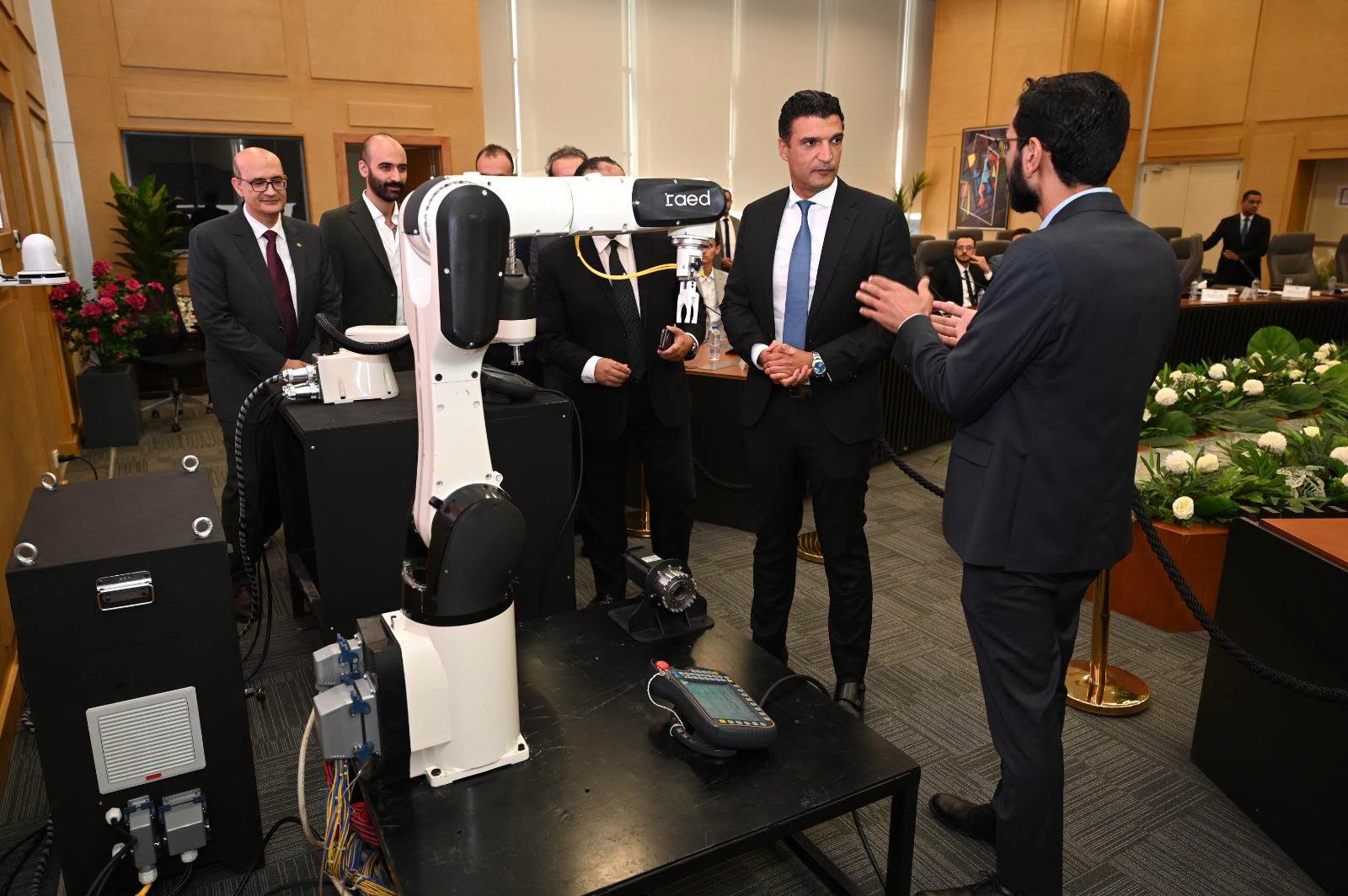
Egypt Launches First Locally Made Industrial Robot

Egypt has officially launched its first locally developed industrial robot in a major milestone for domestic manufacturing and technology.

Egypt Launches Its First Locally Developed Industrial Robot

Egypt has officially launched and delivered its first industrial robot developed entirely by local engineers and the technology company Raedbots. Announced by the Industry Ministry on Wednesday, the milestone project aims to deepen domestic manufacturing and localize industrial technology.

What Happened

The launch and delivery ceremony was attended by Industry Minister Khaled Hashem. The industrial robot was created through a collaborative effort involving Raedbots, the Industrial Modernisation Centre (IMC), and CUBII, alongside contributions from engineers, young people, and Mansoura University.

Designed to integrate directly with a real industrial application, the robot's performance will be monitored closely by the Industry Ministry alongside its industrial user, CUBII. During the event, Minister Hashem highlighted the project as an essential step toward localizing technology and building more efficient, flexible, and competitive factories utilizing global technologies. Ayman Elbayaa also noted that the center is actively working to bridge the gap between creative ideas, innovation, and practical industrial applications.

Key Details

  • Local Content Ratio: The industrial robot currently features an 80 percent local content ratio.
  • Future Target: Developers aim to increase local content to 90 percent after successfully manufacturing the motor locally.
  • Key Contributors: Raedbots, the Industrial Modernisation Centre (IMC), CUBII, Mansoura University, alongside local engineers and youth.

Why It Matters

The deployment of the country's first locally developed industrial robot represents a major push by the Egyptian government to advance domestic manufacturing capabilities. By targeting a 90 percent local content ratio through future domestic motor manufacturing, the initiative supports the broader goal of making factories more competitive and efficient through cutting-edge technology.

What We Know So Far

All reported details regarding the robot's development, its 80 percent local content ratio, and the partnerships involved are fully confirmed by the Industry Ministry and event disclosures.

Sources

Tuesday, September 22, 2026

September 22, 2026

OnePlus N6 Lite 4G Launched in India: Price & Specs

OnePlus has launched the N6 Lite 4G in India, featuring a massive 7,000mAh battery and a budget-friendly price tag of ₹16,999.

OnePlus N6 Lite 4G Launched in India With 7,000mAh Battery

OnePlus has officially expanded its smartphone lineup in India with the launch of the OnePlus N6 Lite 4G. Priced at ₹16,999, the new device focuses on longevity by pairing a massive 7,000mAh battery with a high refresh rate display.

What Happened

OnePlus has introduced the OnePlus N6 Lite 4G to the Indian market, positioning it as an affordable option built for endurance and durability. The smartphone is currently available in a single configuration featuring 4GB of RAM and 64GB of storage.

Built to withstand daily wear and tear, the handset comes equipped with IP64 dust and water resistance alongside MIL-STD-810H durability certifications. Consumers can purchase the device in two distinct color options: Midnight Hype and Neo Green.

Key Details

  • Price: ₹16,999 for the 4GB RAM and 64GB storage variant
  • Display: 6.75-inch HD+ display with a 120Hz refresh rate, 900 nits of peak brightness, and Aqua Touch support
  • Processor: Powered by a Unisoc T7250 octa-core chip
  • Software: Runs Android 16 with OxygenOS 16, incorporating AI features including Google Gemini
  • Battery & Charging: 7,000mAh battery supporting 15W fast charging and wired reverse charging
  • Battery Claims: Up to three days of usage per charge, 26.8 hours of video playback, 29.9 hours of Google Maps navigation, and 55.5 hours of phone calls; rated to retain over 80% health after 1,600 charging cycles (spanning six years)
  • Durability: IP64 rating and MIL-STD-810H certification
  • Colors: Midnight Hype and Neo Green

Why It Matters

The introduction of the OnePlus N6 Lite 4G brings high-capacity power capabilities to the budget-conscious segment in India. By integrating a 7,000mAh battery capable of lasting up to three days alongside modern software like Android 16 and AI features, the device offers heavy-duty battery life at an accessible price point.

What We Know So Far

All details regarding the OnePlus N6 Lite 4G—including its pricing, 4GB/64GB configuration, Unisoc T7250 processor, Android 16 software, 120Hz display, and 7,000mAh battery specifications—are fully confirmed by the launch announcement.

Sources

September 22, 2026

Robotics Firm Addverb Enters Semiconductor Manufacturing

Global robotics firm Addverb is expanding its warehouse automation technology into semiconductor and new-energy manufacturing sectors.

Robotics Firm Addverb Expands Into Semiconductor Manufacturing

Global robotics and warehouse automation company Addverb is expanding its operations beyond traditional warehouse settings. The firm is targeting high-tech manufacturing sectors, identifying semiconductors and new-energy industries as major new opportunities for its advanced robotics technology.

What Happened

Addverb, which began a decade ago with a team of four people building warehouse automation systems, is shifting into high-tech manufacturing sectors such as semiconductors, solar panels, new-energy, and electric vehicle manufacturing.

According to Bir Singh, the company realized two or three years ago that it possessed the capabilities to build more high-tech machinery. This realization led the company to focus on building machines with integrated artificial intelligence. As part of this expansion, Addverb showcased Vertix—a compact storage solution for SMD and SMT components—at SEMICON India 2026.

The company has evolved its product lineup from autonomous mobile robots, shuttles, and stacker cranes to include humanoids, robotic arms, quadrupeds, and collaborative robots. These machines are designed for material movement inside semiconductor facilities, solar panel manufacturing, and electric vehicle production.

Key Details

  • Initial Company Origins: Started a decade ago with four people building warehouse automation systems.
  • Product Evolution: Expanded from autonomous mobile robots, shuttles, and stacker cranes to humanoids, robotic arms, quadrupeds, and collaborative robots.
  • New Product Showcase: Displayed Vertix, a compact storage solution for SMD and SMT components, at SEMICON India 2026.
  • Target Industries: Semiconductors, solar panel manufacturing, new-energy, and electric vehicle manufacturing.
  • Strategic Timeline: Realized capabilities for high-tech development about two or three years ago.

Why It Matters

Semiconductor manufacturing represents a significant area of demand outside of Addverb's regular business operations. While the company believes its technology is competitive, entering the sector comes with entry barriers primarily driven by a lack of prior experience in the specific market.

What We Know So Far

All reported details are confirmed facts from company statements, including the expansion into semiconductors and electric vehicle manufacturing, the showcase of the Vertix storage solution at SEMICON India 2026, and observations regarding industry entry barriers.

Sources

September 22, 2026

TypeSafe AI Launches Jev Model for Typed AI Outputs

San Francisco startup TypeSafe AI has released Jev, a new artificial intelligence model designed to return typed values and probabilities based on predefined output schemas.

TypeSafe AI Launches Jev, a Model That Returns Typed Values

San Francisco startup TypeSafe AI has released a new artificial intelligence model called Jev. Rather than generating traditional human text, Jev returns typed values and probabilities based on a predefined output schema.

What Happened

Released last week by TypeSafe AI—a company founded in 2024 by Diogo Almeida, Erik Gafni, and Sasha Sheng—the Jev model quickly drew intense interest from the developer community. Demand for the model was so high that the startup's API temporarily stopped serving requests.

Unlike standard large language models that produce text one token at a time, Jev operates on a different mechanism. Developers establish an output schema beforehand, outlining the exact structure of every potential answer, before feeding in unstructured state data such as support tickets.

Key Details

  • Company: TypeSafe AI (founded in 2024 by Diogo Almeida, Erik Gafni, and Sasha Sheng)
  • Funding: Raised a $40 million seed round led by DCVC
  • Response Times: End-to-end response times range from 70 to 500 milliseconds by generating outputs in parallel within a single query
  • Pricing: Input costs are $0.042 per million tokens, while output tokens are free
  • Output Type: Returns typed values with attached probabilities, which TypeSafe calls 'calibrated decisions' and a 'frontier-intelligence function call'

Why It Matters

The model's unique approach to handling inputs and producing structured outputs offers developers a distinct alternative to traditional generative text models. By generating parallel outputs within a single query, Jev achieves rapid end-to-end response times.

What We Know So Far

Confirmed facts include the company's founding details, funding amount led by DCVC, technical pricing, and performance metrics reported by TypeSafe AI. An unconfirmed report from Forbes, summarized by SiliconANGLE, places the company's valuation at about $200 million.

Sources